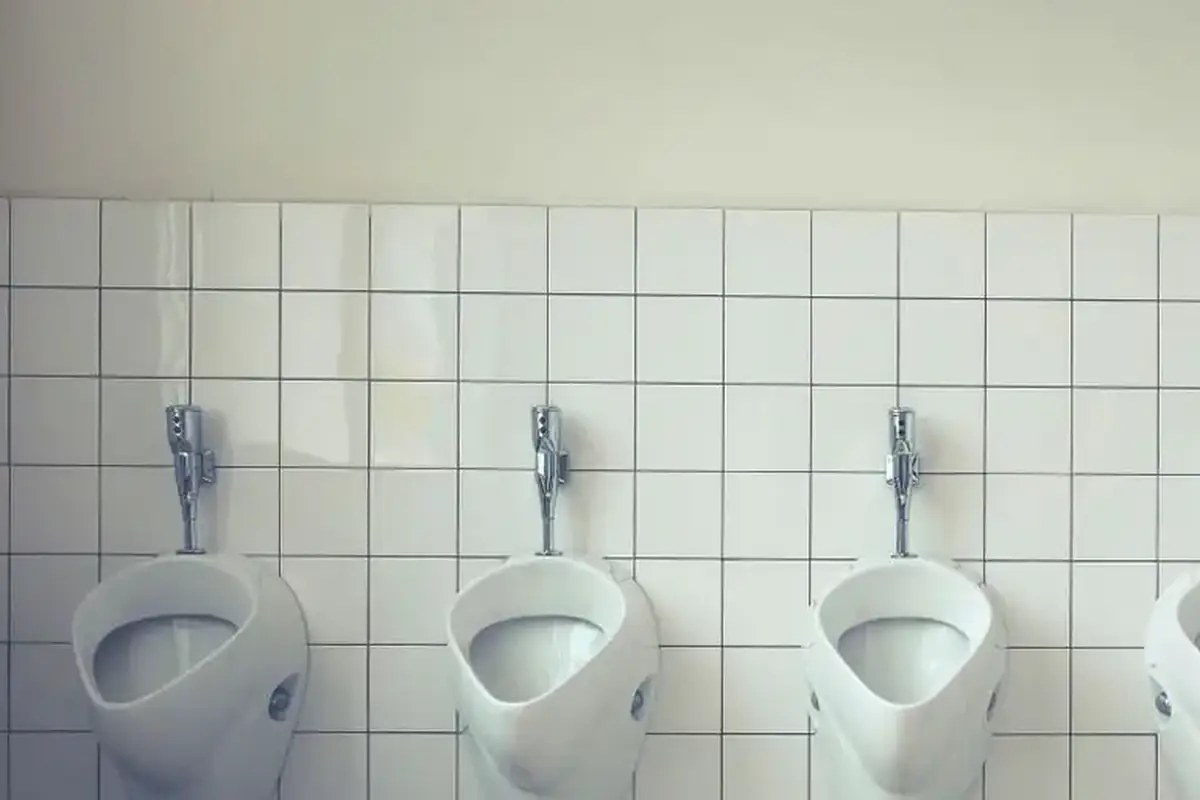
Fixtures that wear out first
- When a flushometer runs on or short-flushes, the culprit tends to be a tired rubber diaphragm or a tiny bypass port packed with grit. Rebuild kits for the usual valve bodies ride on the truck, so the piston or rubber gets swapped right there and the flush volume is matched to the bowl.
- Urinals build up hard uric scale in the trap and the first few feet of waste pipe. When the bowl drains slowly, the fix is usually descaling the trap and cabling the branch, not replacing the urinal. Waterless units need their cartridges changed on schedule or the smell gives them away.
Faucets, mixing valves and hot water
- Sensor faucets fail on batteries, solenoids or a clogged inlet screen. Many commercial washrooms also run a thermostatic mixing valve under the counter to hold the outlet temperature at a safe level. We check the set point with a thermometer and clean the check valves that stop hot water creeping into the cold line.
Signs you need this
- A flush valve runs on or cycles by itself
- Urinal bowls draining slowly or smelling
- Wall-hung toilet moves when someone sits
- Sewer smell near a floor drain
- Sensor tap drips or will not shut off
Drains and floor drains
- Washroom floor drains dry out when nobody mops, and sewer gas follows. A trap primer or a simple refill schedule fixes that. Where a group of fixtures backs up together, we camera the shared waste line to find the belly or the build-up before cutting anything.
How the job runs
- 1
Tell us the site, fixture count and trading hours.
- 2
We visit outside business hours where possible.
- 3
Each failed fixture is rebuilt or replaced and tested.
- 4
Shared drains are cleared and filmed if needed.
- 5
You get a note of parts used and fixtures to watch.
For businesses: tell us your trading hours, the number of fixtures and where the cleanouts are, if you know. It lets us book the visit when it disrupts the least.
Want a second opinion on your own pipes first? Dial (365) 363-1575; the person answering holds the wrench.