Getting into the drain from the top
- Shower strainers are either screwed in, snapped in, or part of a linear drain grate. We remove the cover without scratching the finish, then pull the hair mat out with a barbed tool. A single matted plug can be the size of a fist.
- With the strainer off, a small drum machine with a 1/4 cable goes through the trap. Shower traps are 2-inch on newer builds and 1½-inch on older ones; the smaller ones clog far more often and are worth knowing about if you have long hair in the house.
Tiled stalls and linear drains
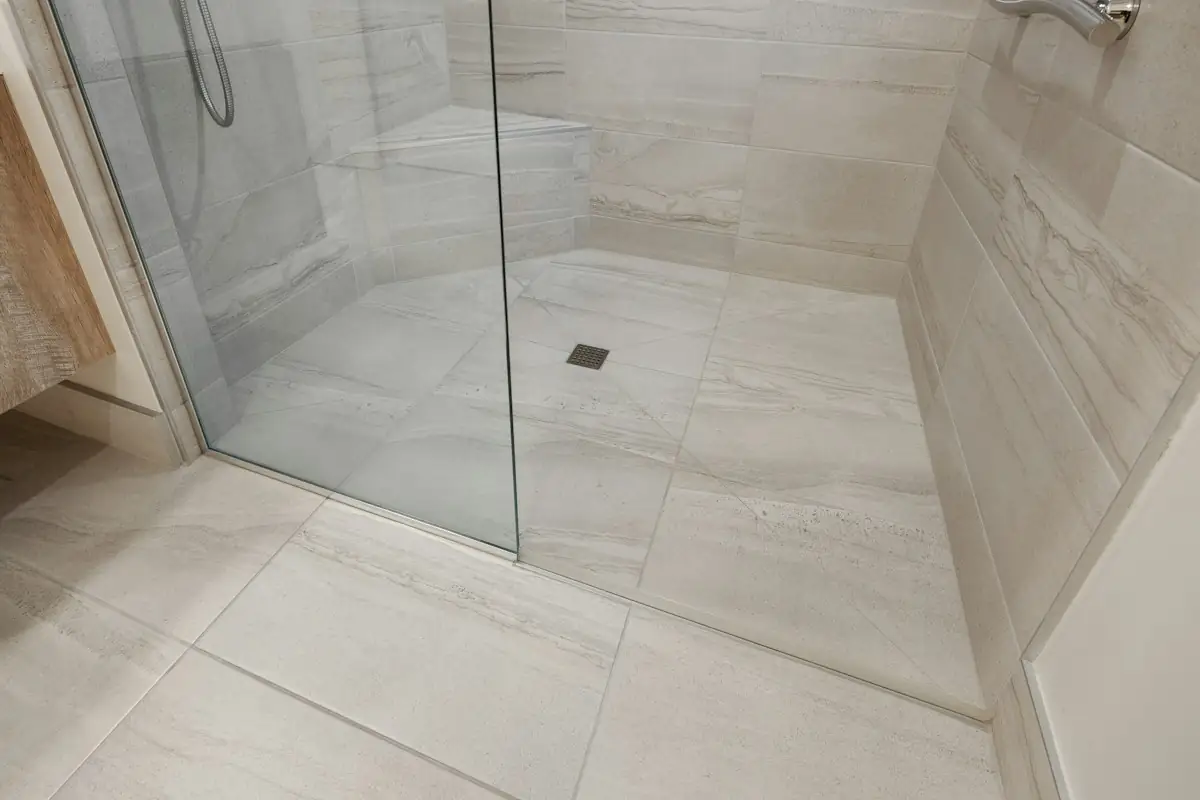
- Custom tile showers in Bayview Hill and Jefferson homes often have linear drains with a hair catch tray under the grate. If the tray is missing or broken, debris goes straight to the trap. We can supply a replacement tray to match many common brands; ask when you call.
- Where a tile installer set the drain body too low, water pools around the grate even when the pipe is clear. That is a tile and slope problem, and we say so rather than cabling a pipe that is already open.
Signs you need this
- Water rises around your feet within a minute
- Hair visible just under the strainer
- A sour smell from the shower floor
- Stains on the ceiling under the shower
- The shower gurgles when the toilet flushes
When the shower is not the problem
- If the shower floods only when the toilet flushes or the washing machine drains, the blockage is downstream in the shared branch or the main. Cabling the shower alone will not hold. We look at the pattern of which fixtures misbehave before choosing where to start.
- Upstairs showers that leak into the ceiling after a clog are usually a failing drain gasket under the base, made worse by water sitting at the seal. We check that once the water is moving.
How the job runs
- 1
Strainer or grate is removed and the visible hair mat is pulled.
- 2
A small cable goes through the trap to scrape the walls.
- 3
The drain is flooded with hot water to check full flow.
- 4
The cover is refitted and a hair catch is recommended if needed.
Richmond Hill note: most houses here sit on York Region municipal water with fairly hard supply, and many basements have a floor drain tied to the sanitary lateral. Mention both on the phone; it changes what goes on the truck.
Want a second opinion on your own pipes first? Dial (365) 363-1575; the person answering holds the wrench.